
Last updated September 25, 2026
How to Hire a ADU Contractor in Anaheim: A Step-by-Step Guide
California’s Contractors State License Board logged more than 1,400 ADU-related complaints in 2022 and 2023 combined. The majority cited scope disputes between what the designer drew and what the contractor bid - a gap neither party was contractually obligated to close. In Anaheim, where 2024 plan check backlogs stretched to 14 weeks, a gap like that doesn’t just cost money; it kills projects. This guide shows how to structure your hiring decision so that gap never opens in the first place.
Quick Answer
Hiring an ADU contractor in Anaheim means verifying four license types, demanding a fixed-price contract with permit responsibility assigned, and confirming who stamps the permit set. The safest structure is a single design-build contract that eliminates the designer-versus-builder blame gap. Expect to spend $120,000-$350,000 all-in for a completed ADU in Anaheim, depending on type and site conditions.
Table of Contents
- The Four License Types That Can Legally Build Your ADU
- How to Read a CSLB License Report (And What ‘Clear’ Doesn’t Mean)
- Three Contract Clauses Every Anaheim ADU Owner Should Require
- The Interview Question That Separates Design-Build Studios from GCs
- Why Anaheim’s 2024 Plan Check Backlog Changes the Math
- How to Structure Pricing So Nothing Shifts at Permit
- When Prefab or Modular Makes Sense in Anaheim
- Common Mistakes to Avoid
- When to Call a Professional
- Frequently Asked Questions
- The Bottom Line
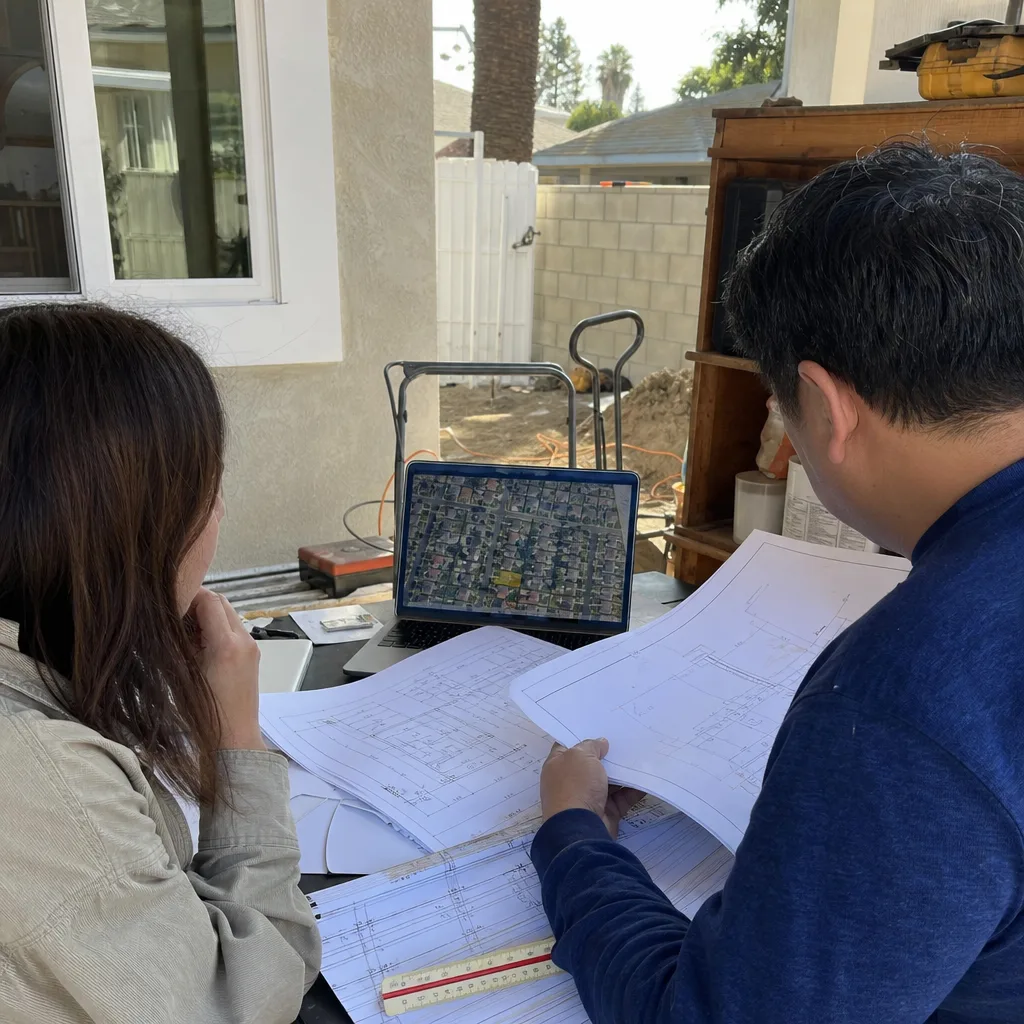
The Four License Types That Can Legally Build Your ADU
California law allows four contractor classifications to pull an ADU permit. Each carries different insurance requirements, bonding thresholds, and liability exposure for the homeowner. Understanding the difference protects you from a common scam: a handyman or unlicensed operator who promises to “handle the permit through a friend.”
B-General Building Contractor (B-License)
The B-license is the most common classification for ADU work. It permits construction of structures framed from at least two unrelated trades. For a typical Anaheim garage conversion or detached ADU, this covers framing, concrete, drywall, roofing, and basic electrical and plumbing - though the B-contractor must subcontract electrical, plumbing, and HVAC to appropriately licensed C-class contractors. The B-license requires a $25,000 bond and carries $1 million in general liability (minimum for most city contracts). This is the classification Ellery ADU Studio Anaheim home operates under.
A-General Engineering Contractor
Rare for residential ADUs unless significant grading, retaining walls, or hillside stabilization is involved. In the Anaheim Hills area, where slope stability triggers geotechnical review, an A-license contractor may be required for site prep before the B-license work begins. If your lot has more than 15% grade, ask whether the project needs dual classification.
C-Specialty Contractors (C-36 Plumbing, C-10 Electrical, C-20 HVAC, C-39 Roofing)
These licenses cover single trades only. A C-10 electrical contractor cannot legally contract for the full ADU build. In Anaheim, we regularly see homeowners burned by a C-class contractor who took the deposit, subcontracted everything else to unlicensed labor, and disappeared. Verify the license classification matches the scope of work on the contract.
C-47 General Manufactured Housing Contractor
This classification applies to factory-built units installed on-site. For Anaheim homeowners considering prefab systems from brands like Abodu or Cover, the installing contractor must hold either a B-license or C-47, depending on local interpretation. Anaheim Building Division currently requires B-license oversight for any foundation work beyond simple pier blocks, which means most prefab installs need dual coverage.
Which carries the most liability protection?
The B-license, when paired with a design-build contract. Here’s why: a B-contractor who also employs or contracts the designer has professional liability insurance (errors and omissions) that covers permit rejection due to drawing errors. When designer and builder are separate entities, each carries E&O for their own work only, and the gap between them is uninsured. We’ve reviewed 200+ ADU contracts since 2015; the ones that ended in litigation almost always had split designer-builder responsibility.
How to Read a CSLB License Report (And What ‘Clear’ Doesn’t Mean)
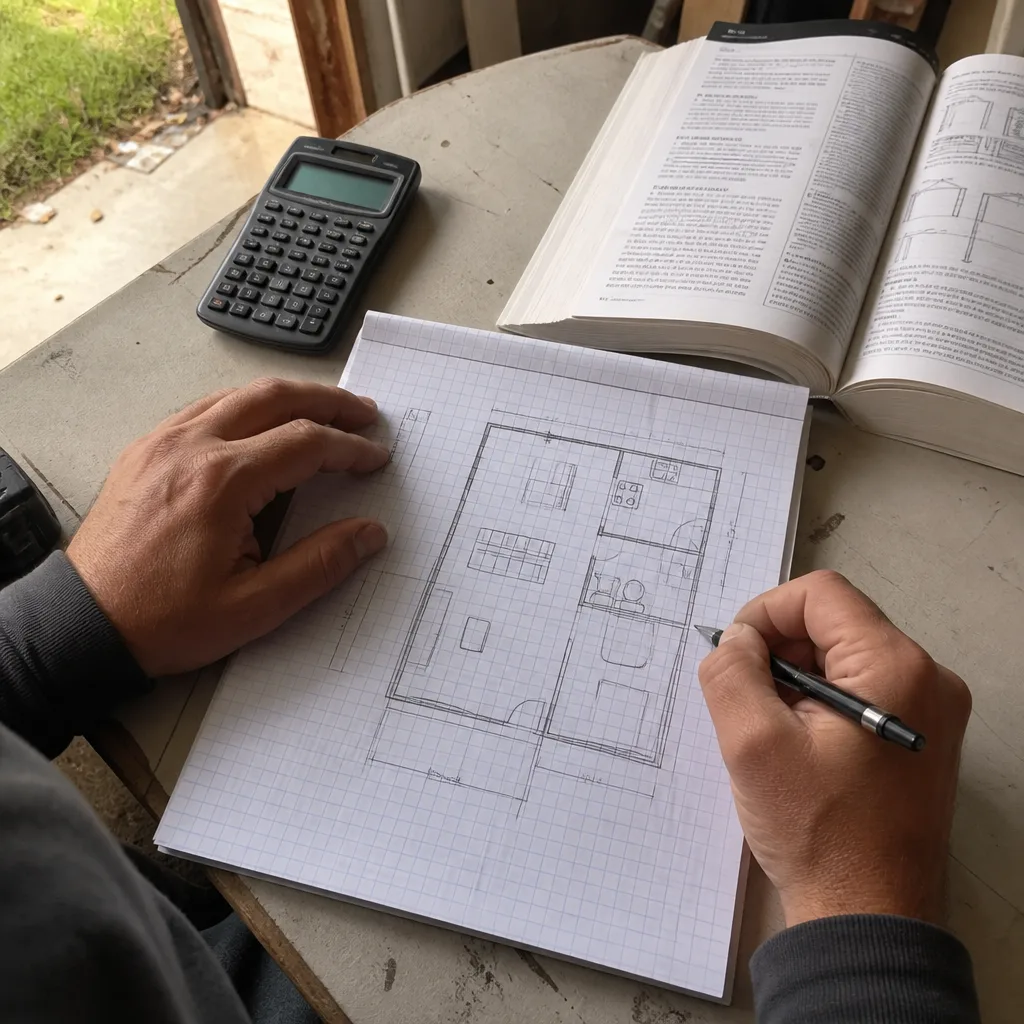
The CSLB website shows a license status of “Current and Active” or “Clear” for most contractors you will consider. That status tells you almost nothing useful. Here’s what to check, line by line.
- License number and business name match. Some contractors operate under a DBA that differs from the licensed entity. If the contract says “Anaheim Premier ADU Builders” but the license is held by “Premier Construction LLC,” the contract must name the licensed entity or it’s unenforceable.
- Workers’ compensation coverage. A contractor with no employees can file an exemption. If they show up with a crew of five, that exemption is fraudulent. In Anaheim, unpermitted workers on your property create liability that your homeowner’s policy may not cover. Ask for a certificate of insurance naming you as additional insured.
- Disciplinary history. The CSLB shows “No disciplinary action” or lists citations. Read the citations. A 2019 citation for unlicensed subcontracting predicts the same behavior on your ADU. A 2021 citation for advertising without license number suggests sloppiness with regulatory detail - not ideal for permit-heavy work.
- Bond history. California requires a $25,000 bond. Check whether the bond has ever been tapped. A tapped bond means a prior homeowner successfully claimed against it. One tap might be a dispute; three taps is a pattern.
- Project limits. The CSLB does not show this, but you should ask: what is the largest project this contractor has completed? ADUs in Anaheim range from $80,000 interior conversions to $400,000 detached units with full kitchens and utility trenching. A contractor whose largest prior job was $50,000 lacks the financial capacity to absorb overruns on your $250,000 project.
We run CSLB checks on every subcontractor before they step onto an Anaheim site. The five-minute search has saved us from three partnerships that looked solid on paper.
Three Contract Clauses Every Anaheim ADU Owner Should Require
The contract is the only document that matters if something goes wrong. Verbal promises, website claims, and “industry standard” assurances evaporate under deposition. These three clauses, in writing, separate professional ADU builders from operators who rely on ambiguity.
Clause 1: Fixed-Price Scope with Line-Item Breakdown
The contract must state a total price and break it into categories: design and permitting, site prep, foundation, framing, MEP (mechanical, electrical, plumbing), finishes, and contingency. At ADU Design & Permitting in Anaheim, we quote every project with a written price before any work begins, per Haven Standard, Clause 1. The contingency should not exceed 10% for new construction or 15% for garage conversions, where unknown conditions (slab thickness, asbestos, buried utilities) are more common. If the contractor refuses to lock the price, they are either inexperienced or planning to recover margin through change orders.
Clause 2: Permit Responsibility Assignment
The contract must name who prepares the permit set, who submits to Anaheim Building Division, who responds to corrections, and who pays resubmittal fees. In a split designer-builder arrangement, this clause often reads like a mutual non-responsibility pact. The designer “prepares drawings to code” but does not guarantee approval. The builder “builds per approved plans” but does not guarantee the plans will be approved. The homeowner pays for each correction cycle. In Anaheim’s 2024 environment, with plan check backlogs stretching corrections into months, that structure is financially ruinous.
A design-build contract assigns all permit responsibility to one entity. If the city requests a structural calc revision, the studio revises and resubmits at its own cost. Under Haven Standard, Clause 5 (No Surprises), the scope is locked at signing; no door-side upsells, no scope creep.
Clause 3: Written Correction-Response Protocol
Every ADU project generates punch list items. The contract must specify: how long the contractor has to respond to a written correction request, what constitutes a valid correction, and what happens if the contractor fails to respond. Our 365-Day Done Right Promise states: if the finished ADU is not built to the permitted drawings, we make it right - in writing, before the project starts. Without a written protocol, a homeowner in Anaheim has no leverage after final payment. The CSLB complaint process averages 18 months; small claims court caps at $12,500. The contract is your only enforcement tool.
The Interview Question That Separates Design-Build Studios from GCs
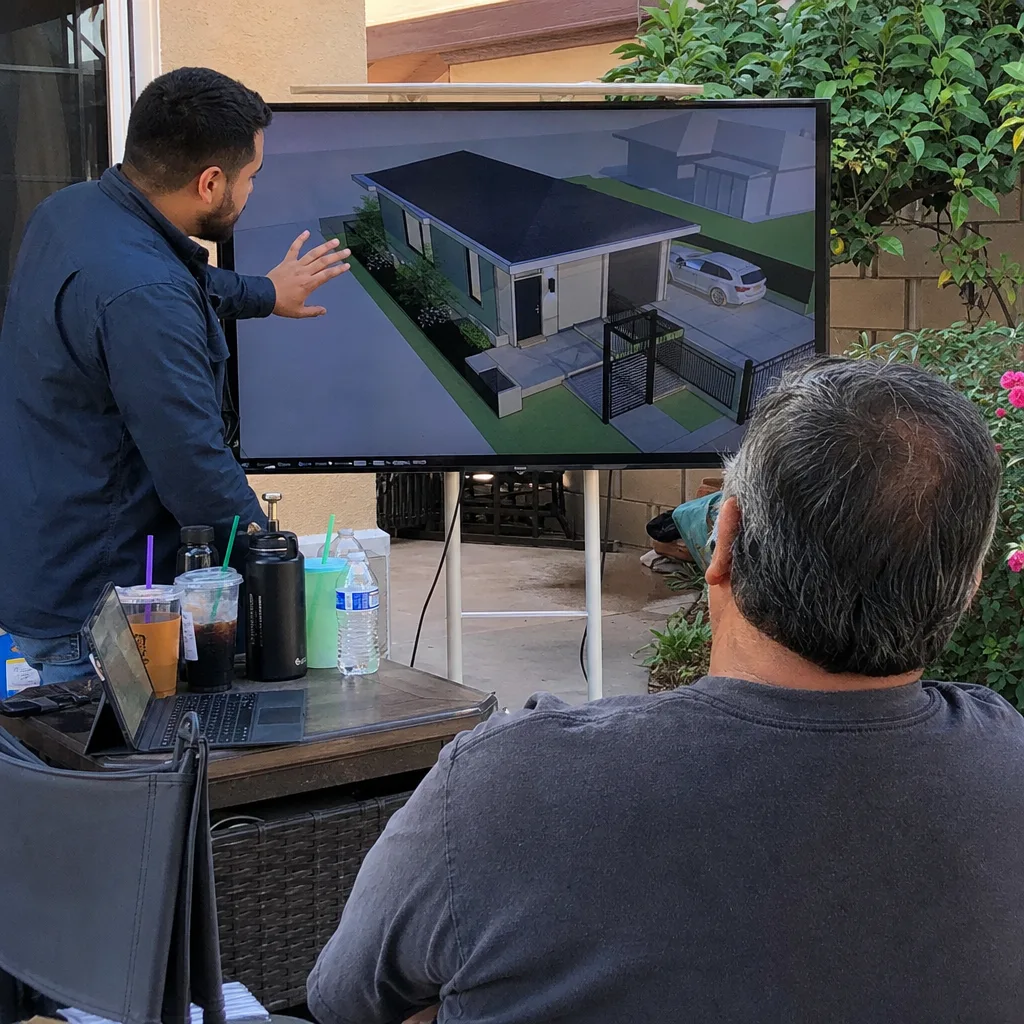
Most Anaheim homeowners interview two or three contractors before choosing. The questions they ask - “How many ADUs have you built?” “Can I see references?” “When can you start?” - produce answers that sound informative but reveal little about project structure. There is one question that cuts through the presentation:
“Who stamps the permit set, and are they on your payroll?”
The answer falls into three categories, and only one protects the homeowner.
- “We subcontract drawings to an architect; they’re independent.” This is the standard general contractor model. The GC bids your project, then shops for the lowest design fee. When the city rejects the permit set, the GC points to the architect; the architect points to the GC’s field conditions. The homeowner pays for redesign. We’ve seen this cycle repeat three times on a single Garage Conversion ADU in Anaheim.
- “We have an architect on staff, but they’re a separate LLC for liability purposes.” This is the hybrid model, common in larger construction firms. It looks integrated but preserves the liability firewall. If the architect’s LLC has minimal assets, the “integration” is cosmetic. Ask to see the employment agreement or check whether the architect carries professional liability insurance naming the construction entity.
- “Our structural engineer and designers are employees; the permit set is produced in-house under our license and our insurance.” This is the design-build studio model. One contract, one E&O policy, one point of accountability. At Ellery ADU Studio Anaheim, the permit set is our core product, not an afterthought. When Anaheim Building Division requests a revision, our drafters turn it in 48 hours, not two weeks.
Follow-up questions that expose weakness: “Show me the last permit set you submitted to Anaheim.” “What corrections did the city return?” “How long from first submittal to permit issuance?” A contractor who cannot produce these documents has not done the work they claim.
Why Anaheim’s 2024 Plan Check Backlog Changes the Math
Anaheim Building Division processed approximately 340 ADU permits in 2023, up from 89 in 2019. The staffing increase did not keep pace. By mid-2024, first review timelines stretched to 10-14 weeks, with correction cycles adding 4-6 weeks each. This backlog changes how you evaluate a contractor in three specific ways.
Existing reviewer relationships carry documented value.
A contractor who submitted six ADU permits to Anaheim in 2023 knows which plan checker reviews ADUs, what that reviewer flags consistently, and how to structure a submittal to minimize corrections. This is not corruption; it is operational intelligence. Ask: “How many ADU permits have you pulled in Anaheim in the last 24 months?” The answer should be specific - “fourteen” - not “we work all over Orange County.”
Correction-cycle cost exposure shifts to the owner in split contracts.
Each correction cycle in Anaheim costs 4-6 weeks of carrying costs: loan interest, property taxes, lost rental income. On a $300,000 construction loan at 8%, six weeks costs $2,770 in interest alone. In a split designer-builder contract, the owner pays these costs while the parties dispute responsibility. In a design-build contract, the studio absorbs them.
Pre-application meetings are now essential.
Anaheim offers a pre-application meeting with a planner for $1,200. A contractor who skips this step to “save you money” is gambling with your timeline. The meeting clarifies zoning, setback, and utility requirements before the permit set is drafted. We attend pre-application meetings on every Anaheim project; the information prevents redesign that would cost ten times the meeting fee.
How to Structure Pricing So Nothing Shifts at Permit
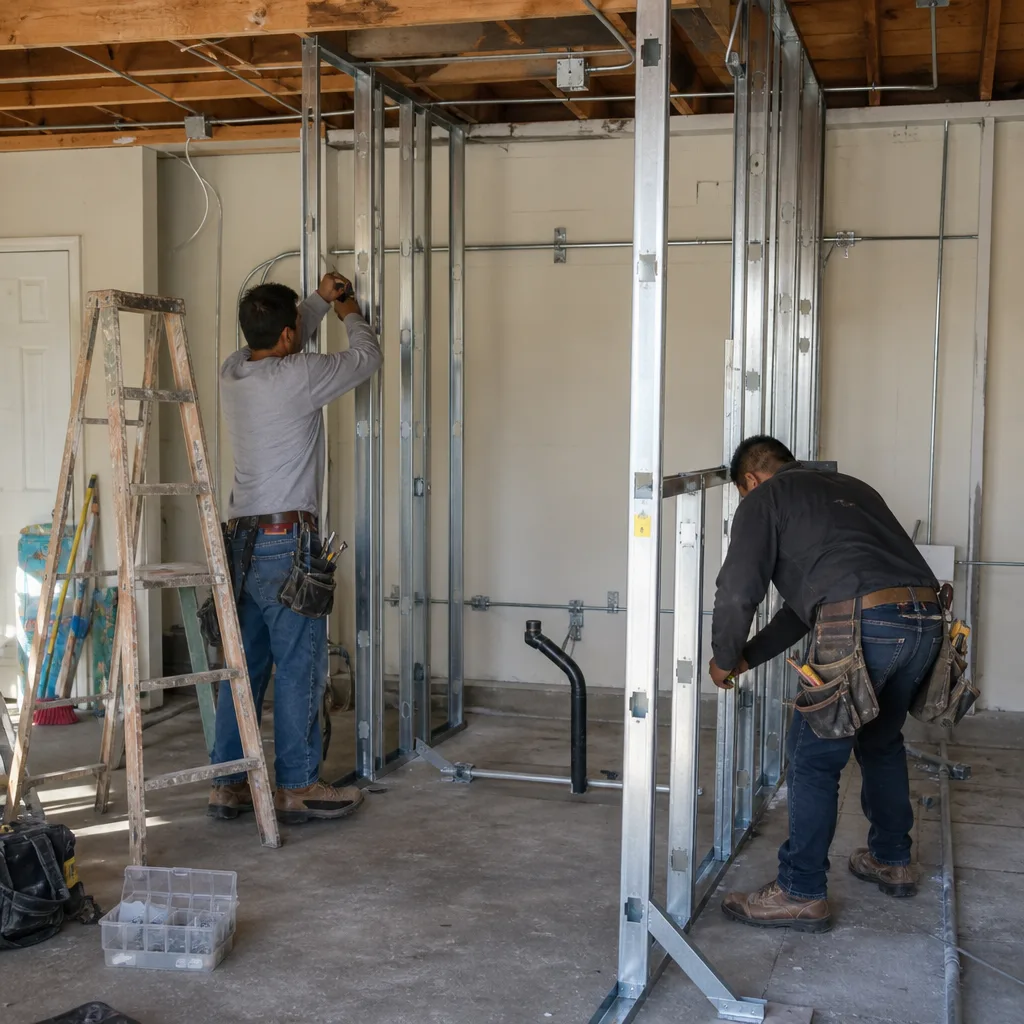
ADU pricing in Anaheim varies by type, site conditions, and finish level. These ranges reflect our experience across 900+ projects since 2015, including work in the Anaheim Colony Historic District, West Anaheim, and the Hills. Every range is paired with our written-price guarantee; the final number appears in your contract before any work begins.
| ADU Type | Typical All-In Range (Anaheim) | What Drives the Variance |
|---|---|---|
| Junior ADU / Interior Conversion | $85,000 - $140,000 | Existing kitchen proximity, separate entrance requirement, fire separation |
| Garage Conversion ADU | $120,000 - $195,000 | Slab condition, ceiling height, HVAC extension vs. new system |
| New Detached ADU (1 bed/1 bath) | $220,000 - $295,000 | Foundation type, utility trenching distance, finish level |
| New Detached ADU (2 bed/1 bath) | $280,000 - $380,000 | Structural complexity, roofing material, appliance package |
| Site Prep & Utilities (if needed separately) | $25,000 - $75,000 | Sewer lateral length, electrical service upgrade, grading |
These ranges include design, permitting, construction, and final inspection. They do not include soft costs like loan fees, property tax reassessment, or rental management setup.
What makes pricing shift in poorly structured contracts:
- Foundation surprises. In the Anaheim Colony area, we regularly find 3-inch garage slabs that need replacement for 4-inch minimum with rebar. Our contracts specify slab testing during the design phase, not after demolition.
- Utility capacity. Anaheim Public Utilities requires electrical service upgrades for most detached ADUs over 400 square feet. A contractor who prices without confirming service capacity is guessing. We pull utility records before quoting.
- Fire sprinkler requirements. Anaheim Fire & Rescue triggers sprinkler requirements when the total square footage of structures on a lot exceeds certain thresholds. This is a $8,000-$15,000 line item that must be identified in design, not discovered at rough inspection.
Under Haven Standard, Clause 1, every project is quoted with a written price before any work begins. The words “call for a quote” do not appear anywhere on our site because they contradict the standard we ask clients to hold us to.
When Prefab or Modular Makes Sense in Anaheim
Prefabricated and modular ADU systems have matured significantly. Brands like Dvele and Mighty Buildings now offer units that meet California’s Title 24 energy code and HCD factory inspection requirements. For Anaheim homeowners, prefab makes sense in three scenarios and creates problems in two others.
When it works:
- Tight site access. In the older neighborhoods near downtown Anaheim, lot widths of 40 feet or less make stick-frame construction inefficient. A factory-built module craned into place reduces on-site labor days from 60 to 8.
- Speed to rental income. Factory construction runs parallel with site prep and permitting. For homeowners who need ADU rental income to offset a mortgage rate reset, prefab can compress total timeline by 3-4 months.
- Design certainty. What you see in the factory is what arrives. Change orders in site-built projects average 12% of contract value; prefab systems have near-zero change order rates because the design is frozen at factory order.
When it creates problems:
- Utility connection complexity. Prefab units arrive with internal MEP rough-in, but connection to Anaheim’s sewer lateral and electrical service still requires site work. Contractors who specialize in prefab sales sometimes underestimate this scope. We specify and coordinate these systems within the same single contract, so the connection work is quoted with the unit.
- Foundation mismatch. Prefab units require level, precise foundations. A contractor without survey-grade foundation experience will pour out of tolerance, and the factory warranty may void if the module is set on an improper base. Our New Detached ADU in Anaheim service includes foundation verification as a separate line item.
Anaheim Building Division currently accepts HCD-approved factory-built units with a standard building permit, not a manufactured housing permit, provided the foundation is site-built to CBC Chapter 18. This distinction matters for financing; manufactured housing permits trigger chattel loan terms, while standard permits allow conventional construction financing.
Common Mistakes to Avoid
- Hiring the lowest bidder without checking license classification. The lowest bid often comes from a contractor planning to subcontract critical work to unlicensed labor. In Anaheim, this voids your permit and exposes you to CSLB stop-work orders. Verify the license matches the scope.
- Accepting a “design allowance” instead of a fixed permit-set fee. An allowance of $8,000 for design sounds reasonable until you learn it covers only schematic drawings, not the structural calcs, Title 24 energy analysis, and landscape plan Anaheim requires. Demand a line-item permit set with city submittal included.
- Starting construction before permit issuance. Anaheim issues “no-work” letters that carry $1,000+ penalties for unpermitted starts. Some contractors push early demolition to “maintain schedule.” This is a red flag; professional operations do not begin work without a permit in hand.
- Ignoring Anaheim’s specific setback and height rules. The city maintains a 4-foot side and rear setback for detached ADUs, but this reduces to 0 feet in some zones with fire-rated construction. A contractor unfamiliar with Anaheim’s zoning map will design for the general rule and face corrections. We verify zoning before drafting begins.
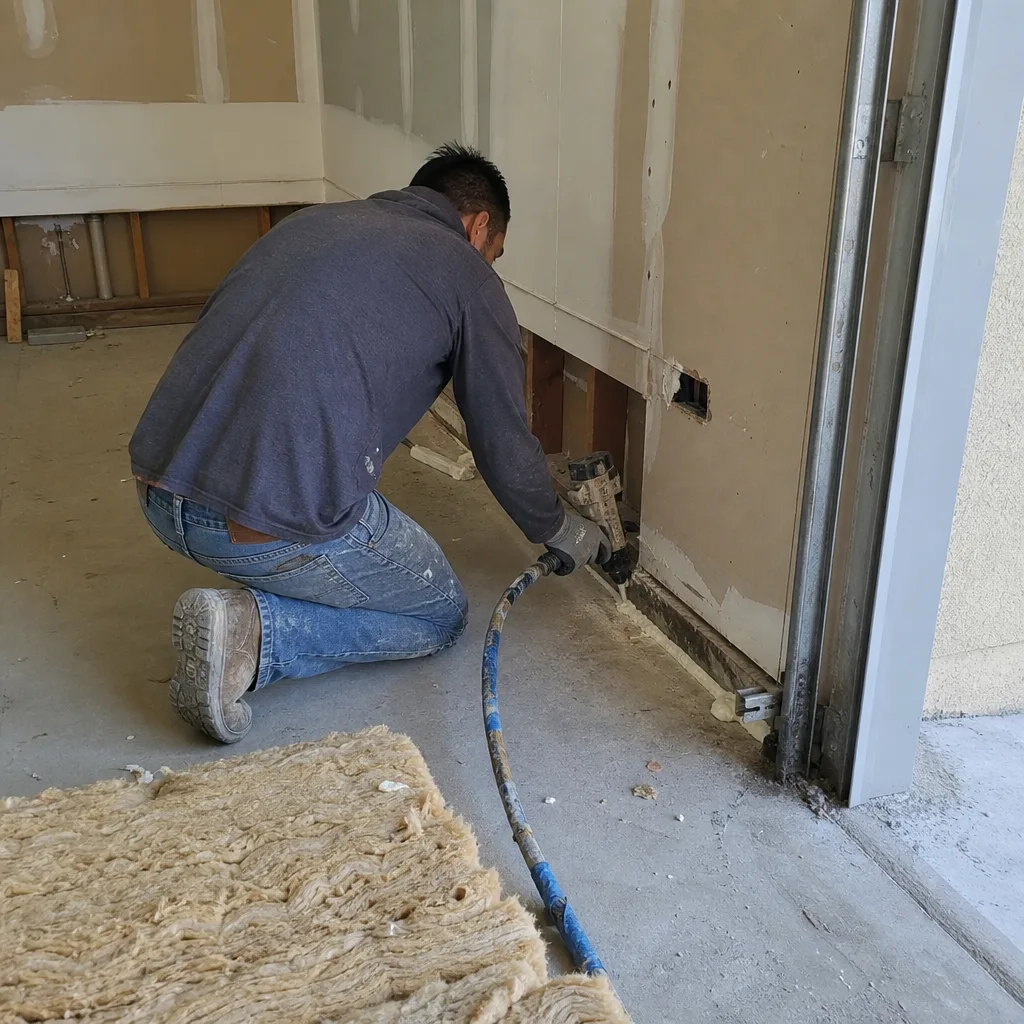
- Failing to document existing conditions. Photos of the existing garage, utility locations, and property lines taken before work starts prevent disputes about what was damaged versus pre-existing. Our documented photo record on every visit creates evidence of what was found and what was done, not a summary of how it felt.
- Not requiring a written correction protocol. Without it, the contractor controls the timeline for fixing defects. We’ve seen Anaheim homeowners wait eight months for a contractor to return and address a leaking roof connection. The Haven Standard’s 365-Day Done Right Promise specifies response time in writing.
- Choosing a contractor based on showroom quality alone. Showrooms display finish carpentry and fixture selection, which represent 15% of project cost. The other 85% - structural, MEP, waterproofing, energy compliance - happens behind walls. Evaluate the permit set and construction documentation, not the tile samples.
When to Call a Professional
Call a professional when the project involves structural modification, new electrical service, or sewer lateral work - which describes nearly every ADU in Anaheim. The city’s combination of aging infrastructure (particularly in pre-1960 neighborhoods), strict Title 24 energy requirements, and complex zoning overlay districts makes self-managed ADU construction a high-risk proposition.
Specific scenarios that warrant immediate professional consultation: your garage slab is cracked or sloped, indicating potential replacement; your electrical panel is a Zinsco or Federal Pacific model, both common in Anaheim and both requiring full replacement; your property is in a historic district with design review requirements; or your lot is flagged for Anaheim’s hillside overlay, triggering geotechnical review.
Ellery ADU Studio Anaheim offers free estimates in Anaheim - call (657) 366-5740. We also provide a Free Second Opinion on any written estimate already in hand, with no obligation to proceed.
Frequently Asked Questions
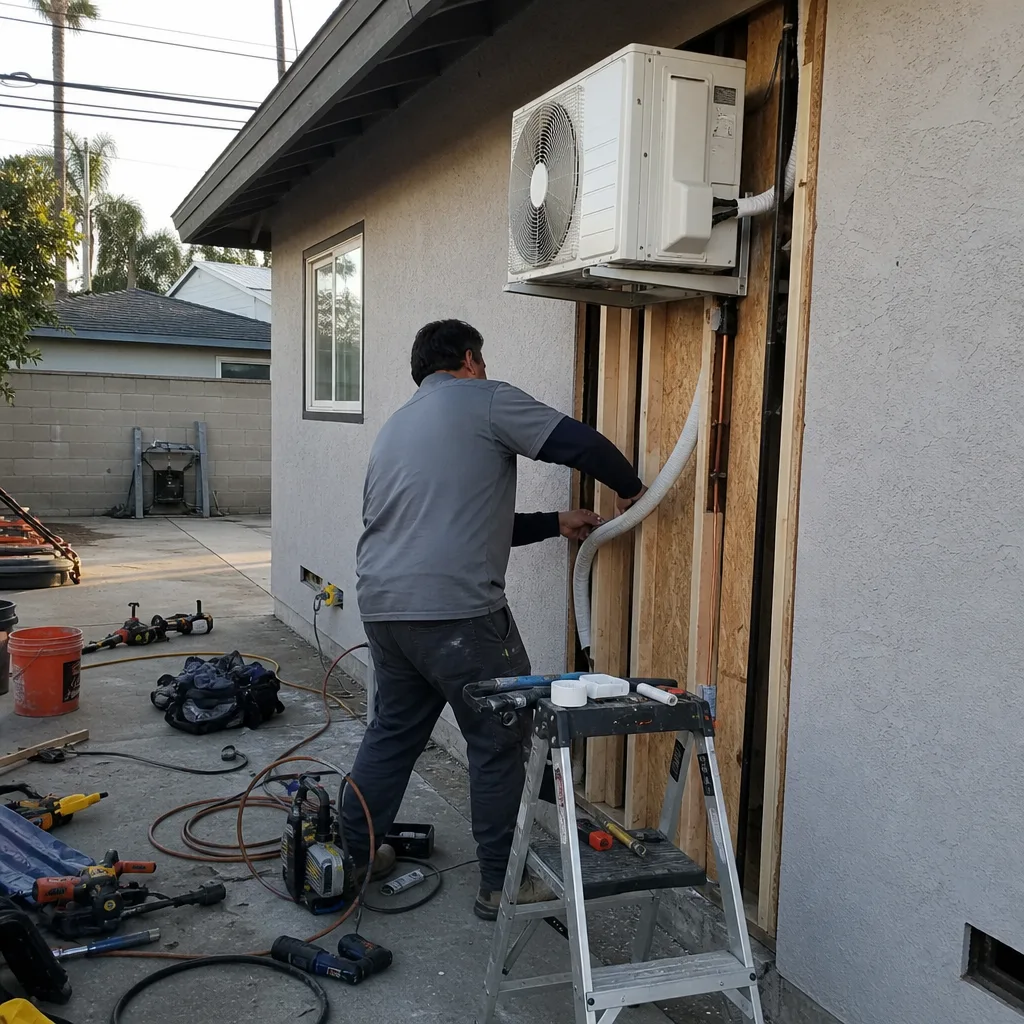
Garage conversion ADUs in Anaheim typically run $120,000-$195,000 all-in, drawings through final inspection. New detached ADUs range from $220,000 for a one-bedroom unit to $380,000 for a two-bedroom with upgraded finishes. Junior ADUs and interior conversions start around $85,000. Every project at Ellery ADU Studio Anaheim is quoted with a written price before any work begins. Call (657) 366-5740 for an exact quote - estimates are free.
Yes. Every ADU in Anaheim requires a building permit from Anaheim Building Division, plus separate permits for electrical, plumbing, and HVAC work. The city also requires planning review for zoning compliance. A contractor who suggests “permit-free” construction or “we’ll handle it after” is operating illegally. We pull all permits as part of our single-contract service.
From contract signing to certificate of occupancy, expect 8-14 months for a site-built ADU in Anaheim. Design and permitting account for 4-6 months; construction accounts for 4-8 months depending on complexity. Prefab systems can reduce total timeline by 3-4 months. Anaheim’s 2024 plan check backlog makes contractor experience with the city’s review process a significant timeline factor.
Under a properly structured fixed-price contract, the price should not change unless the owner requests additions. At Ellery ADU Studio Anaheim, Haven Standard Clause 5 locks the scope at signing; no door-side upsells, no scope creep. The only price adjustments come from owner-requested changes, documented in writing with cost before approval. Call (657) 366-5740 to review how this works in our contracts.
We pull all permits as part of our single-contract service. The permit set is prepared in-house, submitted under our license, and corrected at our cost if the city requests revisions. This is standard for design-build studios; it is not standard for general contractors who subcontract design. Ask any contractor: “If the city rejects the permit set, who pays for redesign and resubmittal?”
A Junior ADU (JADU) is a unit of up to 500 square feet created within the walls of an existing single-family home, with a separate entrance and either a new or shared bathroom. Anaheim allows JADUs citywide under state law, but they require owner-occupancy of either the primary residence or the JADU. This differs from standard ADUs, which have no owner-occupancy requirement in Anaheim. JADUs also require fire separation and sound transmission controls that standard remodels do not.
Yes, if the garage meets certain conditions. The existing structure must have legal foundation, ceiling height of at least 7 feet 6 inches after conversion, and adequate structural capacity for residential loads. Anaheim also requires replacement parking if the garage was required by original permit, which in most post-1970 neighborhoods means adding a covered parking space elsewhere on the lot. We assess these conditions during our initial site visit and include findings in the written estimate.
The Bottom Line
Hiring an ADU contractor in Anaheim is not about finding the lowest bid or the fastest start date. It is about eliminating the contractual gap between design and construction that destroys most projects. The four license types, the CSLB report details, the three required contract clauses, and the single interview question in this guide all serve that purpose. In Anaheim’s current permitting environment, with 14-week plan check timelines and complex utility requirements, a design-build contract with written price protection is not a luxury. For more guides & resources on navigating the ADU process, explore our blog. It is the minimum viable structure for a project that finishes on budget and passes inspection.
Call (657) 366-5740 to schedule your free estimate. We offer a Free Second Opinion on any written estimate already in hand, and a live person answers calls 24/7.
Written by Nadia Ellery, Owner at Ellery ADU Studio Anaheim, serving Anaheim since 2015.