
Last updated September 25, 2026
Seasonal ADU Care for Anaheim: Year-Round Homeowner’s Guide
Anaheim’s October-November Santa Ana wind season produces sustained winds over 50 mph that load stucco cracks, unseat roof flashing, and push smoke and debris into HVAC intakes. Three failure points that cost roughly $200 to address in September and often $2,000+ to repair by December. In our experience permitting and building over 900 ADUs since 2015, the owners who follow a calendar-based maintenance sequence avoid the predictable pattern of dry-heat degradation, wind-event damage, and winter rain intrusion that hits ADUs in inland Orange County. This guide maps that sequence to Anaheim’s actual climate, not a generic Southern California checklist, and complements our ADU Design & Permitting Maintenance Checklist for Anaheim Homeowners.
Quick Answer
ADU maintenance in Anaheim follows a four-season cycle driven by Santa Ana winds (fall), intense UV exposure (summer), brief heavy winter rains, and spring drainage recovery. A documented maintenance log protects warranty and insurance claims, and most seasonal tasks take under two hours if done on schedule. For related guidance, see our ADU Permits, Codes & Inspections in CA: What You Need to Know.
Table of Contents
- June-August: Heat, UV, and Slab Stress
- September-November: Santa Ana Wind Preparation
- December-February: Rain Intrusion and Clay Soil Drainage
- March-May: Post-Rain Foundation and Moisture Recovery
- The Maintenance Log: Protecting Your Investment
- Prefab and Modular ADU Considerations
- Common Mistakes to Avoid
- When to Call a Professional
- Frequently Asked Questions
- The Bottom Line
June-August: Heat, UV, and Slab Stress
Anaheim’s inland position puts ADUs under UV indexes that regularly hit 10+ from late June through August. The sun angle here, roughly 34° at solar noon in mid-July, strikes south- and west-facing walls at a near-perpendicular angle that accelerates paint film degradation compared to coastal Orange County. We’ve documented this on hundreds of site visits: exterior latex on Anaheim ADUs typically shows chalking and color shift 18-24 months faster than identical products installed in Newport Beach.
Concrete slab expansion joint inspection. ADUs built on pad foundations in Anaheim sit on clay-heavy soils that expand and contract with moisture. The expansion joints between slab sections, and between slab and stem wall, compress in summer heat. When we inspect garage conversion ADUs in the Colony district or newer detached units in Anaheim Hills, we look for joint filler that’s extruded, cracked, or missing entirely. Open joints allow water intrusion when winter rains arrive, and the freeze-thaw cycle (minimal here, but present in January overnight lows) widens cracks progressively.
Attic ventilation check. Unvented or poorly vented ADU attics in Anaheim reach 140°F+ in July. That heat degradates asphalt shingle adhesive, warps rafters over time, and forces air conditioning systems to run longer cycles. We verify that ridge vents aren’t blocked by insulation baffles, that soffit vents are clear of paint or stucco overspray, and that any gable vents have intact screens. For garage conversion ADUs in Anaheim, this is critical: the original garage rarely had adequate ventilation for conditioned living space.
Exterior paint UV degradation assessment. We check south and west elevations for chalking (rub your hand across the surface; significant white residue indicates binder breakdown), cracking at trim interfaces, and peeling at the sill plate. Anaheim’s dry heat causes paint to fail by erosion rather than blistering, which means the substrate can be damaged before the failure is visually obvious. Touch-up painting in August, before fall winds abrade weakened surfaces further, extends repaint cycles by 2-3 years.
Summer task checklist:
- Inspect and photograph all slab expansion joints; note missing or failed filler
- Verify attic ventilation path from soffit to ridge; check for blockages
- Assess south and west wall paint condition; schedule touch-up if chalking is present
- Service HVAC condenser coils; clear debris from Anaheim’s jacaranda and palm drop
- Test GFCI outlets in exterior locations; heat cycling degrades internal components
September-November: Santa Ana Wind Preparation
The Santa Ana wind season is Anaheim’s most destructive maintenance window. Sustained winds of 30-50 mph, with gusts to 70+ in canyon-adjacent neighborhoods like Anaheim Hills, create loading conditions that most ADU designs don’t face the rest of the year. We’ve responded to calls where roof flashing lifted in October, then the first November rain entered the wall cavity and damaged insulation before the owner noticed.
Roof flashing inspection and securement. We check all penetrations: plumbing vents, electrical mast, HVAC linesets, and any skylights. Step flashing at roof-wall intersections gets particular attention; wind uplift can separate the top edge from the wall, creating a gap that channels water directly into the structure. We reseal with compatible sealant (not generic caulk; polyurethane or silicone specified for the flashing material) and verify counter-flashing laps are adequate.
Stucco crack sealing. Hairline cracks in Anaheim ADU stucco are normal; cracks wider than 1/16 inch are not. Wind drives rain into these openings with pressure that static rain doesn’t achieve. We clean cracks with compressed air, apply elastomeric patching compound, and feather to match texture. For new detached ADUs in Anaheim, we specify elastomeric coatings on windward elevations during initial construction; this is harder to retrofit but worth discussing if your ADU faces southwest toward the typical Santa Ana direction.
HVAC filter replacement and intake protection. Santa Ana winds carry ash, dust, and agricultural particulate from the Santa Ana River corridor and inland empire. We upgrade from standard 1-inch filters to 2-inch pleated media (MERV 11-13, verified compatible with the air handler) and verify that exterior intake grilles have intact insect screens that also block larger debris. For heat pump systems, we clear the outdoor coil of accumulated debris before heating season begins.
Emergency egress path clearance. California Building Code requires maintained egress paths for all sleeping rooms. We verify that windows open freely, that required wells are clear of soil and debris accumulation, and that ladders or steps are secure. In Anaheim’s mature neighborhoods like the Colony, where ADUs often sit close to property lines, egress paths are sometimes compromised by adjacent landscaping growth during summer.
Fall task checklist:
- Inspect all roof flashing; reseal penetrations and verify counter-flashing
- Map and seal stucco cracks >1/16 inch; photograph before/after
- Upgrade HVAC filters; clean outdoor coils and verify intake screens
- Test and clear all emergency egress windows and wells
- Secure or store loose exterior items that wind can project
December-February: Rain Intrusion and Clay Soil Drainage
Anaheim’s winter rainfall averages 13-14 inches annually, concentrated in brief, intense events rather than persistent drizzle. January 2023 brought 5.5 inches in a single week; January 2024 saw similar concentration. This pattern tests drainage systems that function adequately in light rain but fail under peak loading. The clay-heavy soils in Anaheim’s western neighborhoods, toward the Santa Ana River, expand when saturated and shrink during dry spells, creating cyclic foundation stress.
Window weep screed inspection. Weep screeds are the perforated metal strips at the base of stucco walls that allow moisture to drain from the drainage plane. In Anaheim ADUs, they’re often buried by landscaping mulch or soil accumulation, or clogged with stucco overspray from original construction. Blocked weep screeds force water into the wall cavity, where it damages sheathing and can trigger mold growth in the insulation cavity. We excavate to expose the screed, verify perforations are clear, and ensure the drainage path falls away from the foundation.
French drain and surface drainage capacity. ADUs with pad foundations on clay soils depend on perimeter drainage to prevent hydrostatic pressure against the slab edge. We verify that French drains (if present) have clear outlet points, that surface grades fall 6 inches in the first 10 feet from the foundation, and that downspouts discharge at least 5 feet from the slab. In Anaheim’s flatter neighborhoods, where grades are minimal, this is particularly critical. We’ve seen ADU designs in Anaheim that required engineered drainage solutions because natural fall was insufficient.
Interior moisture monitoring. We recommend inexpensive humidity loggers ($15-25) in the ADU’s main living space and any closet against an exterior wall. Target range is 30-50% relative humidity. Sustained readings above 60% indicate a moisture source that needs investigation. Winter is when hidden intrusion becomes detectable; by spring, the damage is often established.
Winter task checklist:
- Expose and clear all window weep screeds; verify drainage path
- Test French drain flow; clear outlet points and verify discharge distance
- Verify surface grades; add soil or regrade where fall is inadequate
- Install humidity loggers; establish baseline readings
- Inspect interior for water staining at ceiling corners and baseboards
March-May: Post-Rain Foundation and Moisture Recovery
March in Anaheim brings the transition from saturated winter soils to drying conditions. This is when clay soil shrinkage reveals whether winter drainage was adequate, and when moisture that entered the structure during winter events becomes visible as damage or detectable as elevated humidity.
Foundation drainage inspection. We walk the ADU perimeter looking for soil pull-away from the foundation (indicates drying shrinkage), new cracks in slab or stucco, and any standing water that hasn’t drained within 48 hours of the last rain. In Anaheim’s older neighborhoods, where ADUs sometimes replace detached garages with minimal original drainage, we’ve found that winter saturation reveals inadequate perimeter drains that summer inspections miss entirely.
Slab moisture barrier verification. For ADUs on grade, the vapor barrier beneath the slab prevents soil moisture from migrating upward. We can’t inspect the barrier directly without destructive testing, but we can infer its condition. We use a calcium chloride test kit ($30-40) or relative humidity probe to measure slab moisture emission. Readings above 3 pounds per 1,000 square feet per 24 hours (calcium chloride) or 75% relative humidity (in-situ probe) indicate barrier compromise. This matters for flooring: vinyl plank, laminate, and engineered wood all fail prematurely on moist slabs.
Exterior sealant joint renewal. Spring is the optimal window to renew sealant at window perimeters, door thresholds, and utility penetrations. Temperatures are moderate, humidity is moderate, and sealants cure predictably. We remove failed sealant entirely (never seal over old), prime if required by the manufacturer, and apply new material with proper tooling for adhesion and drainage geometry.
Spring task checklist:
- Inspect foundation perimeter for soil shrinkage, new cracks, or standing water
- Test slab moisture emission; compare to flooring manufacturer requirements
- Renew exterior sealant at all penetrations and interfaces
- Service irrigation systems; verify spray patterns don’t hit ADU walls
- Schedule professional HVAC maintenance before summer loading
The Maintenance Log: Protecting Your Investment
Documentation is not bureaucracy. It’s the evidence that determines whether a warranty claim or insurance dispute resolves in your favor. Under Ellery ADU Studio Anaheim’s Haven Standard, every project includes a documented photo record at completion. The maintenance log extends that record forward.
We recommend a simple structure: dated entries with photographs, task descriptions, and any product specifications (paint brand and color code, sealant manufacturer and product, filter MERV rating). Cloud storage with automatic backup; a dedicated folder per ADU. If a James Hardie siding panel delaminates, or a Tuff Shed modular unit shows seam separation, the manufacturer will request maintenance documentation. If your insurance carrier disputes whether damage was sudden or gradual, the log establishes the timeline.
For Anaheim ADU owners, we specifically recommend photographing:
- Roof condition from the ground (use zoom; don’t climb unless qualified)
- Stucco condition, full elevation shots, dated
- Slab expansion joints before and after any work
- HVAC filter condition at change intervals
- Any moisture readings with date, location, and instrument model
The 365-Day Done Right Promise that governs Ellery ADU Studio Anaheim projects requires that we make right any failure to meet the permitted drawings. A maintenance log that shows the ADU was maintained per manufacturer specifications strengthens that claim if needed. Conversely, a log that shows deferred maintenance weakens warranty positions with any builder.
Prefab and Modular ADU Considerations
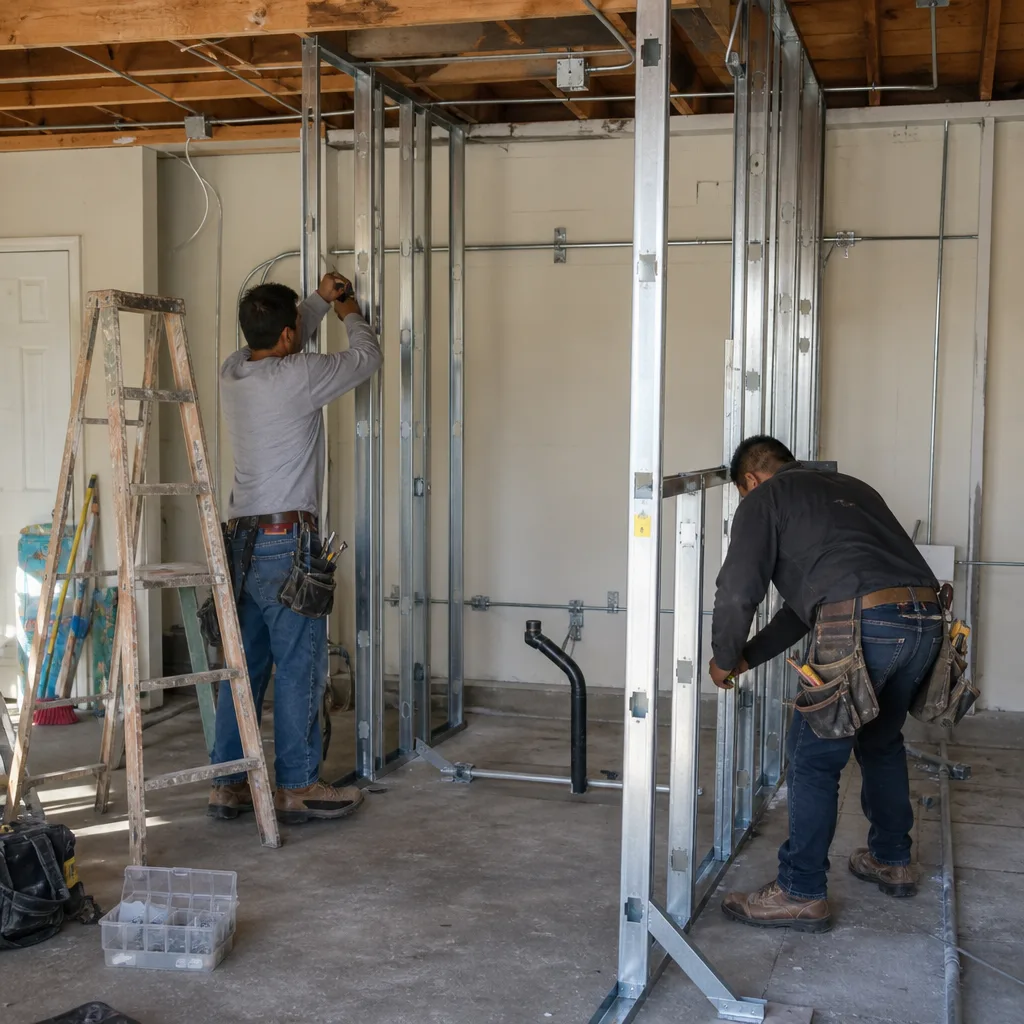
Prefab and modular ADUs in Anaheim, including systems from Plant Prefab, Tuff Shed, and James Hardie that Ellery ADU Studio specifies and coordinates, have maintenance profiles that differ from site-built construction in specific ways.
Module seam inspection. Multi-module units have vertical seams at module junctions. These are factory-sealed, but thermal cycling and wind loading stress the sealant. We inspect these seams annually, not seasonally; spring is the optimal window. Look for sealant cracking, tape lifting, or any daylight visible at interior finish intersections.
Transported component stress points. Modules shipped to Anaheim from out-of-area factories experience road vibration that can loosen electrical connections and stress plumbing joints. We recommend a licensed electrician and plumber inspect accessible connections at the two-year mark, even if no symptoms are present. This is standard practice for Plant Prefab installations we’ve coordinated in Orange County.
Foundation interface. Modular ADUs often use perimeter foundation systems with specific leveling and anchor requirements. Spring is when we verify that no settlement or anchor movement has occurred after winter soil saturation. Tuff Shed’s ADU-specific foundation details, for example, include adjustable post bases that should be checked for corrosion and proper bearing.
Manufacturer warranty coordination. Prefab warranties often require specific maintenance to remain valid. James Hardie’s siding warranty, for instance, requires 6-inch ground clearance and annual cleaning. We build these requirements into our maintenance guidance at project handoff, specific to the brand and product installed.
Common Mistakes to Avoid
- Skipping fall prep because “it never rains hard here.” Anaheim’s rain is concentrated, not gentle. The January 2024 event flooded ADUs with clogged drains that had handled drizzle for years.
- Using generic caulk for stucco crack repair. Stucco moves. Acrylic latex or siliconeized acrylic sealants accommodate that movement; cheap caulk fails in six months and traps water behind it.
- Ignoring attic temperature because the ADU “has good insulation.” Insulation slows heat transfer but doesn’t eliminate it. A 140°F attic degrades everything in it, insulation included, over time.
- Documenting with verbal summaries instead of photographs. “Roof looks fine” is useless in a dispute. A dated photograph with the inspection checklist is evidence.
- Deferring maintenance until sale preparation. Deferred maintenance compounds costs and reveals itself in inspections, often killing deals or triggering credits that exceed proactive repair costs.
- Assuming a new ADU needs no maintenance for five years. Even well-built ADUs in Anaheim experience settlement, sealant curing shrinkage, and fastener relaxation in the first 24 months. The first two years are actually the most important for establishing baseline conditions.
When to Call a Professional
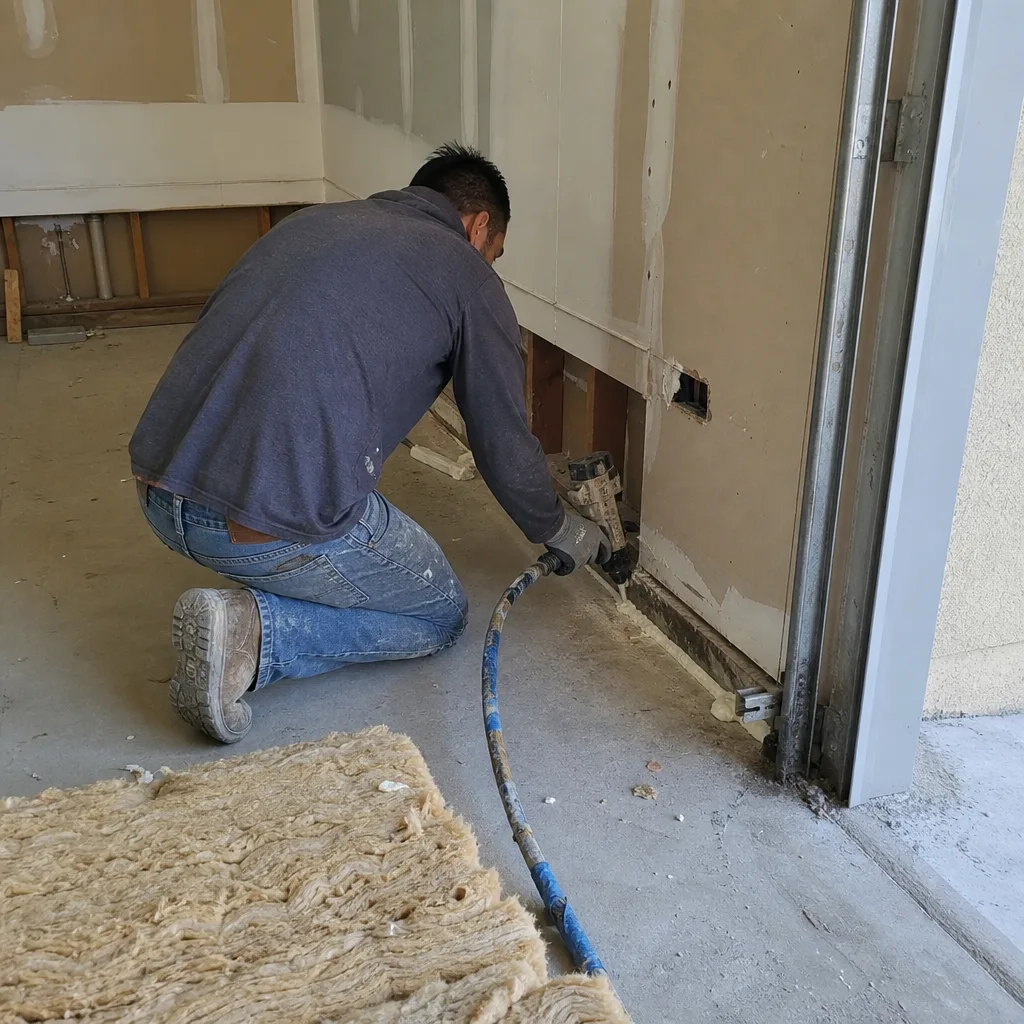
Some seasonal tasks are homeowner-appropriate: filter changes, visual inspections, humidity logging. Others require licensed expertise: roof work at height, electrical panel access, stucco repair that matches existing texture and maintains drainage geometry. Foundation drainage assessment on clay soils often needs a soils engineer if simple regrading doesn’t resolve standing water.
Ellery ADU Studio Anaheim offers free estimates for ADU maintenance assessments, including a documented photo record of findings and a written scope for any recommended work. Our license number appears on every page we publish; it’s verified, not just claimed. If you have a written estimate from another provider, we also offer a Free Second Opinion to verify scope and pricing against what we’ve seen on comparable Anaheim ADUs.
Call (657) 366-5740 to schedule your free estimate.
Frequently Asked Questions
Homeowner-performed seasonal tasks (filters, visual inspections, basic sealing) typically run $100-$200 in materials annually. Professional inspection and maintenance service for a standard detached ADU ranges $400-$800 per year, with higher costs if drainage or roofing issues are found. For detailed cost planning, see our ADU Cost Breakdown: The Anaheim Homeowner’s Reference for 2026. Call (657) 366-5740 for an exact quote on your specific ADU - estimates are free, and every project is quoted with a written price before any work begins under Haven Standard Clause 1.
Ground-level visual inspection every fall before Santa Ana season; professional inspection every three years, or after any wind event with gusts over 60 mph. Anaheim Hills and canyon-adjacent properties should increase frequency to biennial professional inspection due to higher wind exposure.
No. Under Haven Standard Clause 5 (No Surprises), the scope is locked at signing. The written price you receive before work starts is the price you pay. No door-side upsells, no scope creep. This applies to maintenance assessments and any repair work we perform.
Pure maintenance (filter changes, sealant renewal, cleaning) does not require permits. Repairs that alter structural, electrical, or plumbing systems may. In Anaheim, roof covering replacement over 25% of the area triggers a permit; stucco repair that doesn’t alter the drainage plane typically does not. We pull permits when required and include that cost in the written quote.
A thorough seasonal assessment for a typical Anaheim ADU takes 90-120 minutes. We photograph everything, test accessible systems, and provide a written report with findings and recommendations. Documented photo records from every visit are included - you receive evidence of what was found, not a summary of how it felt.
Yes. We maintain and assess ADUs throughout Anaheim regardless of original builder, including prefab and modular units from other providers. Our experience with ADU design and permitting in Anaheim since 2015 gives us familiarity with construction across multiple eras and methods. Call (657) 366-5740 to schedule.
The Bottom Line
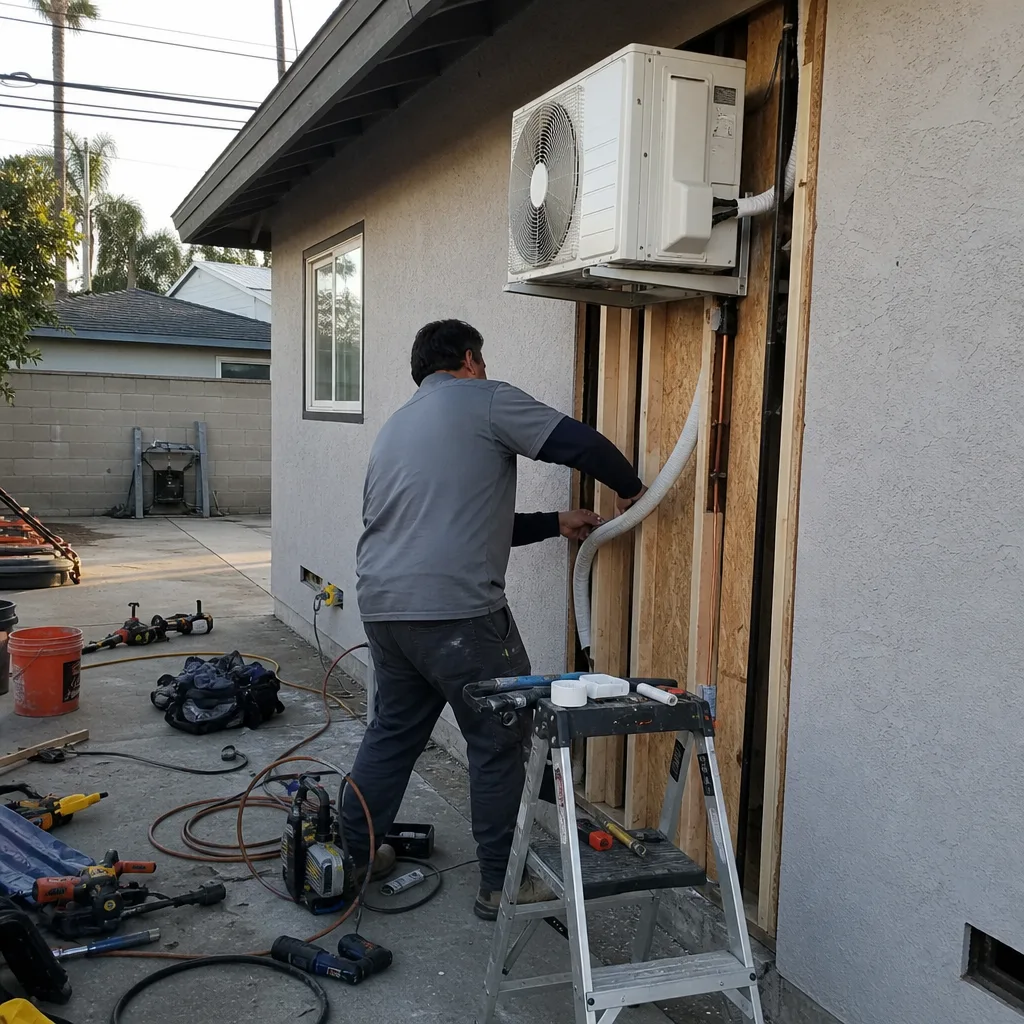
Anaheim’s climate delivers a predictable maintenance sequence: UV and heat stress in summer, wind loading in fall, concentrated rain in winter, and drainage recovery in spring. Addressing each season’s specific failure modes on schedule prevents the compound damage that makes ADU maintenance expensive. A documented log protects your warranty and insurance position. And a design-build studio that treats the permit set as the core product, not an afterthought, builds ADUs that are easier to maintain from the start. Explore more guides & resources for Anaheim ADU owners.
Ellery ADU Studio Anaheim has designed, permitted, and built over 900 ADUs since 2015, every one with a written price before work started and a documented photo record when work was complete. The Haven Standard governs every project: written price, photo documentation, and a 365-Day Done Right Promise backed in writing. A live person answers calls 24/7.
Call (657) 366-5740 to schedule your free estimate.
Written by Nadia Ellery, Owner at Ellery ADU Studio Anaheim, serving Anaheim since 2015.