
Last updated September 25, 2026
ADU Warning Signs: A Anaheim Homeowner’s Reference Guide
Most ADU projects that fail in Anaheim don’t collapse during construction. They die in the gap between a verbal promise and a missing contract clause. In 2023, California’s Department of Consumer Affairs logged more complaints against ADU contractors than any other residential specialty, and the majority involved projects that never broke ground. The warning signs were in the paperwork all along. This guide names the specific document gaps, bid structures, and contractor behaviors that predict failure, so you can exit before writing the second check. For a broader look at planning your project, see our The Complete Guide to ADU in Anaheim.
Quick Answer
The clearest warning signs of a failing ADU project in Anaheim are: a contract that doesn’t name the permit applicant or assign correction-response responsibility; a bid under $180,000 all-in that lacks itemized exclusions; and a timeline under six months for a detached ADU that ignores Anaheim’s current plan check queue. These three signals appear in the majority of California ADU disputes, and all are visible before construction begins.
Table of Contents
- The Bid Structure Warning Sign: When the Math Doesn’t Add Up
- Document Warning Signs: What’s Missing from the Permit Set
- Timeline Warning Signs: Promises That Ignore Anaheim’s Real Queue
- Contract Warning Signs: Clauses That Protect the Wrong Party
- Post-Permit Warning Signs: What Happens After the Permit Is Pulled
- Prefab and Modular Warning Signs: Brand-Specific Gaps
- Common Mistakes to Avoid
- When to Call a Professional
- Frequently Asked Questions
- The Bottom Line
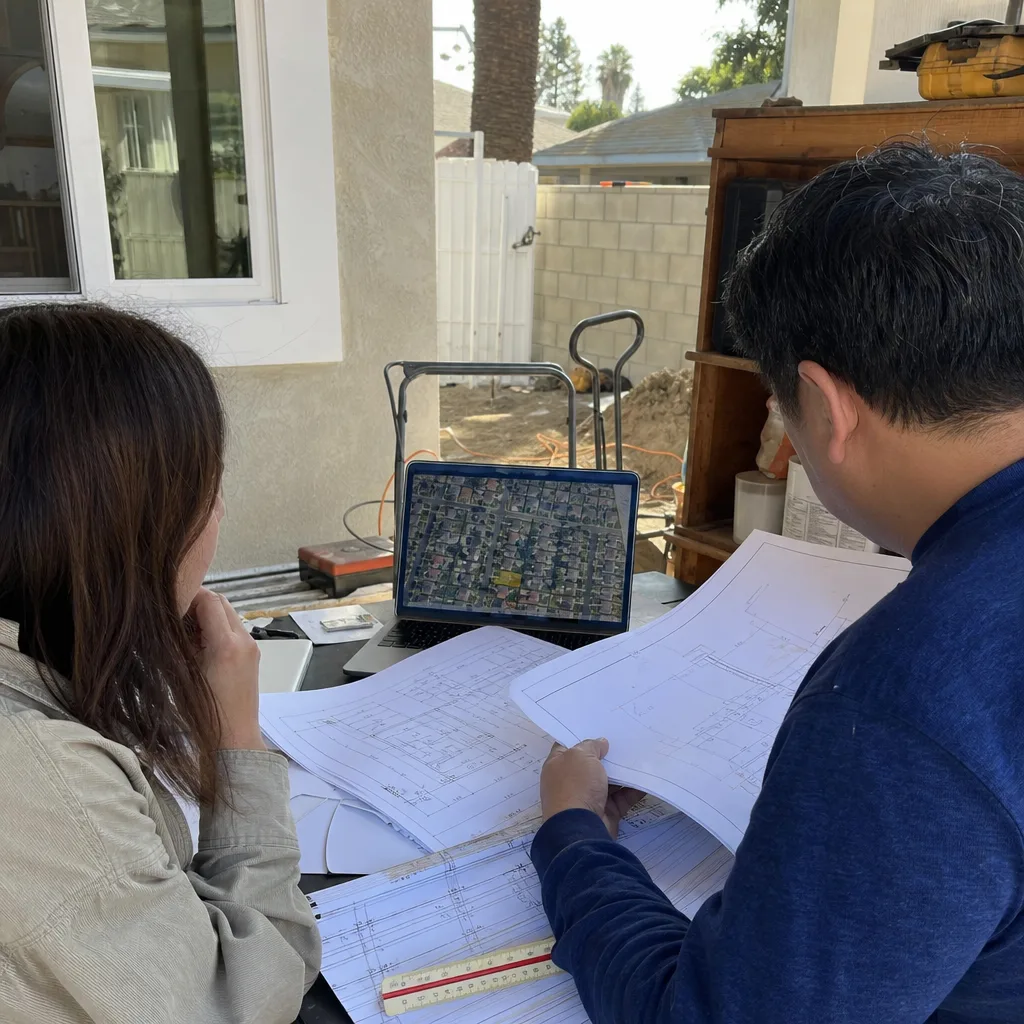
The Bid Structure Warning Sign: When the Math Doesn’t Add Up
In Anaheim’s 2025 market, any ADU bid under $180,000 all-in that doesn’t itemize exclusions is almost certainly missing permit fees, soils work, or utility connections. We’ve reviewed estimates from across Orange County, and the pattern is consistent: the lower the bottom line, the longer the list of unstated costs that surface after signing.
Here’s how the numbers typically break down for Anaheim. A garage conversion ADU starts around $85,000 for a straightforward 400-square-foot unit with existing slab, basic electrical, and no structural changes. Add $15,000-$25,000 if the garage slab is cracked or insufficiently thick, which we see regularly in Anaheim’s 1960s-1980s tract neighborhoods like Anaheim Hills and the Colony. A new detached ADU runs $220,000-$350,000 all-in, including drawings, permits, foundation, utility trenching, and final inspection. The $180,000 floor matters because below it, something material has been omitted.
The specific exclusions to watch for:
- Soils and geotechnical work: Anaheim’s clay-heavy soils in the flatland areas near the Santa Ana River can require engineered fill or pier foundations. A bid that assumes “standard conditions” without a soils report is gambling with your budget.
- Utility connection fees: Anaheim Public Utilities charges separate connection fees for water, sewer, and electric that can total $8,000-$15,000 depending on meter size and distance from the main. These are not permit fees. They are infrastructure fees, and many bids bury them or omit them entirely.
- Impact and school fees: Under California’s SB 9 and ADU law, some fees are limited, but others still apply. Anaheim’s specific fee schedule changes with state legislation, and a bid that quotes “fees included” without naming the specific fees is not a fixed price.
- Title 24 compliance and energy calculations: Every ADU in Anaheim requires a Title 24 energy compliance report. The report itself costs $800-$1,500, and the design changes it may trigger, such as increased insulation or solar readiness, can add $3,000-$8,000 to construction.
At Ellery ADU Studio Anaheim home, we itemize every line before work starts. Under Haven Standard, Clause 1, the written price is the written price. No exclusions hidden in fine print, no “allowances” that function as blank checks.
The red flag behavior: a contractor who resists itemization, who says “trust me, we’ve done hundreds,” or who presents a single number with a two-page contract. The contract length isn’t the issue. The issue is whether each major cost category is named, quantified, and assigned to a responsible party.
Document Warning Signs: What’s Missing from the Permit Set
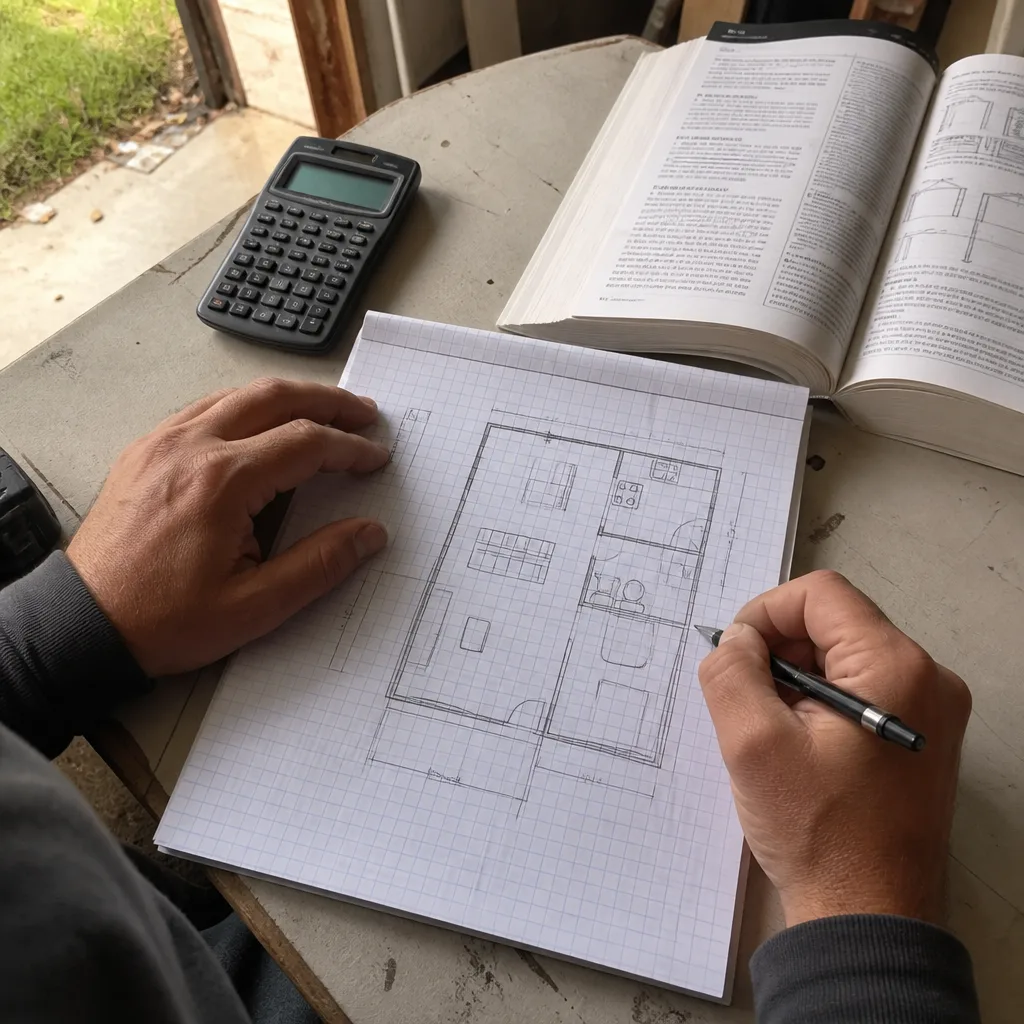
The permit set is the core product of any ADU project, not an afterthought. Yet in our review of failed projects across Orange County, the most common precursor to collapse was a permit set that was never completed, never stamped, or never submitted. The warning signs are visible in the documents you receive, or don’t receive, before the first site visit.
Three documents must be present and stamped:
- Stamped structural drawings: These must bear the seal of a California-licensed structural engineer, not a contractor’s hand sketch. In Anaheim, the plan check desk at the Building Division will reject any structural plan without a current stamp. We’ve seen projects stall for eight months because the contractor used an out-of-state engineer whose stamp California doesn’t recognize.
- Title 24 compliance report: This energy analysis is separate from the structural set and must be performed by a certified energy consultant. The report generates a compliance package that the builder must follow. No report, no permit. No compliance package, no final inspection.
- Named plan check contact: The permit set should include a cover sheet naming the architect or designer of record, the structural engineer, the Title 24 consultant, and the permit expeditor if one is used. Each name should include a California license number. A set with anonymous “TBD” placeholders is a set that isn’t ready for submission.
Anaheim-specific context: the city’s Building Division currently processes ADU plan check in approximately 8-12 weeks for complete submittals, but incomplete submittals cycle back with corrections that add 4-6 weeks per round. A contractor who submits a partial set to “get in line” is wasting your time and their fee. We’ve seen this tactic used to justify a “permit pending” status while construction begins illegally.
Additional document warning signs:
- No site plan showing existing and proposed structures with dimensions to all property lines
- No fire separation detail for garage conversions, which Anaheim requires per CBC Section R302.6
- No drainage plan addressing Anaheim’s occasional heavy winter rains and clay soil expansion
- No utility routing diagram showing water, sewer, gas, and electric paths from main to ADU
At Ellery ADU Studio, the permit set is what we sell. ADU Design & Permitting in Anaheim is a single contract phase with a single written price, and the set isn’t released for construction until it passes plan check. This eliminates the designer-versus-builder blame gap that derails most projects.
Timeline Warning Signs: Promises That Ignore Anaheim’s Real Queue
A contractor who quotes under six months for a detached ADU in Anaheim is not accounting for the current plan check queue, the inspection scheduling reality, or the sequential nature of utility connections. This isn’t pessimism. It’s arithmetic.
Here’s the realistic timeline we’ve observed across our 900+ ADU projects since 2015:
- Design and permit set preparation: 6-10 weeks for a standard detached ADU; 4-6 weeks for a garage conversion with no structural changes
- Plan check and corrections: 8-12 weeks for Anaheim’s Building Division, plus 2-4 weeks for corrections if the set is complete on first submittal
- Permit issuance and pre-construction: 2-3 weeks for final fee payment, utility coordination, and contractor mobilization
- Construction: 12-16 weeks for a garage conversion; 20-28 weeks for a detached ADU depending on foundation type and weather
- Inspections and final: 4-8 weeks for rough-in, insulation, drywall, and final inspections, assuming no re-inspections
The total: 7-11 months for a garage conversion, 10-14 months for a detached ADU. Anyone promising substantially less is either uninformed or misrepresenting the process.
Anaheim-specific factors that extend timelines:
- Seasonal rain: January through March can halt foundation and exterior work. Contractors who promise year-round schedules without rain days haven’t built in Anaheim.
- Utility coordination: Anaheim Public Utilities schedules trench inspections and meter sets on their own timeline, not yours. A contractor who doesn’t name their utility liaison is guessing.
- Neighborhood-specific constraints: Historic districts like the Anaheim Colony require additional design review. Eichler neighborhoods have HOA covenants that restrict exterior materials. These add weeks that aren’t in the standard timeline.
The red flag: a timeline presented as a single number without phase breakdowns, without contingency, and without naming the specific authority that controls each phase. Under Haven Standard, Clause 5 (No Surprises), we provide a phase-by-phase schedule with named durations and owner-notification triggers if any phase extends beyond its window.
Contract Warning Signs: Clauses That Protect the Wrong Party
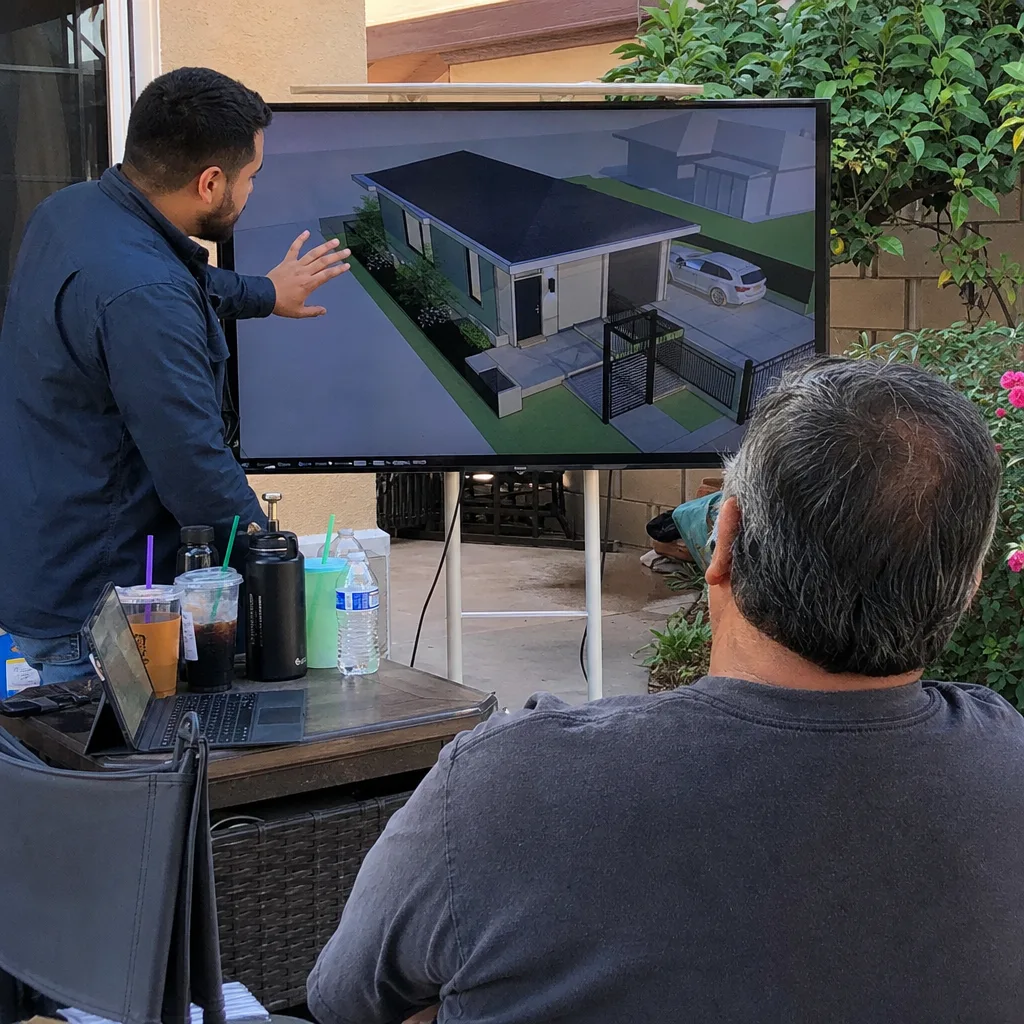
The contract is where most ADU failures become inevitable. Not because the contract is long, but because it’s missing the clauses that assign responsibility when things go wrong. In our review of disputed contracts across California, three patterns predict litigation:
“Cost plus” pricing without a guaranteed maximum price. Cost-plus contracts shift all material and labor risk to the owner. The contractor has no incentive to control costs, and the owner bears every overrun. In Anaheim’s volatile construction market, where lumber and electrical panel prices have swung 30% in a single year, an open-ended cost-plus contract is a budget disaster. The Haven Standard requires a written fixed price before work starts, Clause 1. No exceptions.
Change-order caps above 10% of contract value without owner approval triggers. California law requires written change orders for any work beyond the contract scope, but many contracts set the owner-approval threshold at 15% or 20% of total value. On a $250,000 ADU, that’s $37,500-$50,000 in unilateral contractor authority. Our contracts require owner signature on any change order, with a 10% cap on cumulative changes without renegotiation of the entire contract price.
No lien release schedule. California mechanics lien law allows subcontractors and suppliers to file liens against your property if the general contractor doesn’t pay them, even if you’ve paid the general in full. A proper contract includes a lien release schedule: conditional releases with each progress payment, unconditional releases upon final payment, and a sworn statement of payments from the general contractor. A contract without this schedule leaves you exposed to double payment.
Additional contract warning signs specific to Anaheim’s regulatory environment:
- No named permit applicant, leaving you responsible for corrections the contractor caused
- No correction-response clause, meaning plan check comments sit unanswered for weeks
- No redesign responsibility, so you’re billed again when the city requires plan changes
- No inspection coordination clause, forcing you to schedule inspections yourself
- No warranty language beyond the statutory minimum, or warranty language that excludes the most common defects
The verbal promise that the price “includes permits” means nothing unless the contract names the permit applicant, assigns correction-response responsibility, and specifies what happens if the permit set requires a redesign. These three clauses are absent from the majority of ADU contracts reviewed in California disputes. At Ellery ADU Studio, all three are in every contract, in writing, before the first check.
Post-Permit Warning Signs: What Happens After the Permit Is Pulled
Permit issuance is not the finish line of pre-construction. It’s the starting line of a phase where new warning signs appear, and where illegal work becomes visible if you know what to look for.
No inspection card on site. Every permitted construction site in Anaheim must display the inspection card, issued by the Building Division, in a weatherproof location visible from the street. This card records each inspection date, result, and inspector signature. If there’s no card, work is proceeding without permit, and you are liable for code violations, stop-work orders, and potential demolition.
Work proceeding before rough-in sign-off. The inspection sequence is not optional. Rough electrical, plumbing, and mechanical must pass before insulation and drywall. Drywall must pass before finish work. A contractor who closes walls before rough-in inspection is hiding work that may not meet code, and you’re paying to open those walls again when the inspector requires it.
Subcontractors who cannot name the permit number. This is a simple test. Ask any worker on your site for the permit number. If they don’t know it, they may not know they’re working on a permitted job. Unpermitted subcontractors are uninsured subcontractors, and their injuries or damage become your liability.
Anaheim’s Building Division offers online permit status lookup, and we provide every client with the direct link. You should see inspection results posted within 48 hours of each visit. If results aren’t posting, inspections aren’t happening.
Additional post-permit warning signs:
- Material deliveries without matching delivery tickets showing your project address
- Changes to the approved plans without a revised permit set posted on site
- Foundation work without a pre-pour inspection, which Anaheim requires for all engineered slabs
- Roofing or waterproofing without a mid-installation inspection, which we require under our quality protocol even when the city doesn’t
The 365-Day Done Right Promise applies here: if the finished ADU is not built to the permitted drawings, we make it right. But the promise only matters if the permit set was correct to begin with, and if construction followed it. That’s why our documented photo record, included on every visit, shows what was found and what was done, not a summary of how it felt.
Prefab and Modular Warning Signs: Brand-Specific Gaps
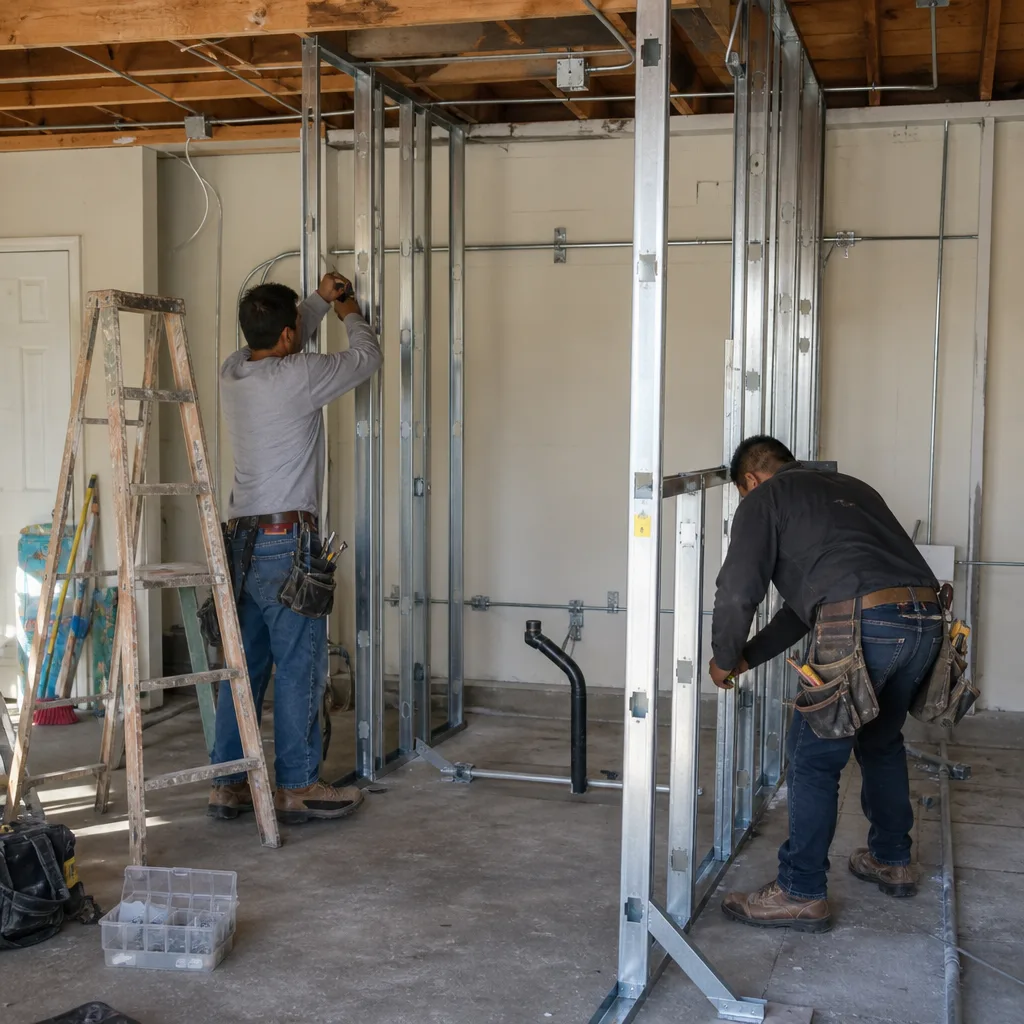
Prefab and modular ADU systems from brands including Mighty Buildings, Boxabl, Plant Prefab, and Tuff Shed can reduce on-site construction time, but they introduce their own warning signs that standard site-built contracts don’t address. We’ve specified and coordinated these systems since 2018, and the failures we’ve seen share a common pattern: the gap between factory promise and site reality.
Foundation mismatch. Every prefab unit requires a foundation engineered to its specific load points and connection details. A contractor who quotes foundation work before receiving the manufacturer’s foundation plan is guessing. We’ve seen Boxabl units delivered to slabs that couldn’t accept their connection system, requiring $12,000 in rework. The correct sequence: manufacturer foundation plan, local structural engineer review, permit set including both, then foundation construction.
Utility rough-in coordination. Prefab units arrive with stub locations that must align with site utilities within inches. A contractor who hasn’t obtained the unit’s utility diagram before trenching is creating a connection puzzle. Plant Prefab units, for example, have specific water and sewer stub heights that vary by model. Tuff Shed’s Studio Shed line requires electrical stub locations that differ from their standard storage building specs.
Transport and crane access. Mighty Buildings’ polymer composite panels require flatbed delivery with crane offload. Boxabl’s foldable units need specific unfolding clearances. These aren’t afterthoughts. They’re site constraints that must be verified before ordering. A contractor who hasn’t walked your access route with a transport dimension sheet hasn’t planned for delivery.
Local code compliance, not just factory certification. Factory certification under HUD or state modular programs doesn’t automatically equal Anaheim Building Division approval. The unit must still meet California Building Code, Title 24, and Anaheim’s specific amendments. We’ve seen certified units rejected at plan check because the factory’s structural calculations didn’t account for Anaheim’s seismic zone or wind exposure.
The single-contract advantage matters here. When New Detached ADU in Anaheim includes prefab specification, the same entity that selects the unit coordinates the foundation, utilities, and permit set. No factory blaming the foundation contractor, no foundation contractor blaming the factory. One written price, one responsible party.
Common Mistakes to Avoid
- Accepting a “permit included” verbal promise without contract language naming the permit applicant and correction responsibility. In Anaheim, the property owner is the default permit applicant unless the contract assigns this role. If the contractor won’t name themselves, you’re doing the paperwork.
- Comparing bids that don’t share the same scope, exclusions, and assumptions. A $140,000 bid with $60,000 in unstated exclusions is more expensive than a $180,000 bid with zero exclusions. Demand line-item alignment before comparing bottom lines.
- Starting construction on a “pending” permit. Anaheim issues stop-work orders and can require demolition of unpermitted work. The permit card must be posted and the first inspection passed before substantive construction begins.
- Ignoring soil conditions in flatland Anaheim neighborhoods. The clay soils near Katella Avenue and the Santa Ana River corridor expand and contract seasonally. A foundation designed for “typical” conditions without a soils report is a crack waiting to happen.
- Assuming prefab delivery solves all timeline problems. Factory production schedules, transport coordination, and site preparation still require 6-10 months total. Anyone promising a prefab ADU in three months hasn’t accounted for Anaheim’s permit queue.
- Signing a contract without a lien release schedule. California’s mechanics lien law protects subcontractors and suppliers, not homeowners. Without scheduled releases, you can pay in full and still face liens from unpaid trades.
- Treating the ADU as a short-term flip rather than a long-term asset. Anaheim’s rent control exemptions for ADUs, combined with strong rental demand near Disneyland Resort and the Anaheim Convention Center, make ADUs generational wealth tools. Cutting corners on design or construction reduces that asset’s lifespan and value.
When to Call a Professional
Call a design-build studio when you have a written estimate in hand and something feels incomplete, or read How to Hire a ADU Contractor in Anaheim: A Step-by-Step Guide before you decide. That’s the moment to verify, before the second check, before the permit is pulled, before construction locks in every prior mistake. Ellery ADU Studio Anaheim offers free estimates in Anaheim, and we provide a Free Second Opinion on any written estimate already in hand. We’ll name what’s missing, what the omission costs, and what the contract should say instead. Call (657) 366-5740 to schedule your review.
Frequently Asked Questions
Garage conversion ADUs in Anaheim typically run $85,000-$150,000 all-in, while new detached ADUs range from $220,000-$350,000 depending on size, foundation type, and utility distance. Every project at Ellery ADU Studio is quoted with a written price before any work begins, per Haven Standard, Clause 1. Call (657) 366-5740 for an exact quote on your specific property.
An Anaheim ADU requires a building permit, electrical permit, plumbing permit, and mechanical permit, all coordinated through the city’s Building Division. The permit set must include stamped structural drawings, a Title 24 energy compliance report, and a site plan showing compliance with setback, height, and lot coverage requirements. At Ellery ADU Studio, Garage Conversion ADU in Anaheim and our other services include complete permit coordination as a single contract phase.
Complete ADU plan check submittals in Anaheim currently take 8-12 weeks for initial review, with correction cycles adding 4-6 weeks each if the set is incomplete. A contractor who promises permit approval in under two months is not accounting for the current queue or is submitting an incomplete set to “get in line.” We don’t recommend either approach.
California law allows owner-builders to permit and construct their own ADU, but the permit set requirements, inspection sequence, and subcontractor coordination are identical to contractor-built projects. See DIY vs Professional ADU: The Anaheim Homeowner’s Decision Guide for a full comparison. Most owner-builders underestimate the design and permit phase, which typically requires 6-10 weeks of professional work even before construction begins. The savings on contractor markup are often lost to timeline delays, re-inspection fees, and rework.
Unpermitted ADU work in Anaheim can result in stop-work orders, fines, and required demolition of completed work. The property owner bears legal liability, not the contractor, unless the contract specifically assigned permit responsibility to the contractor, and even then, enforcement requires litigation. Verify the inspection card is posted and inspection results are appearing online before paying progress draws.
Yes. We specify and coordinate prefab and modular systems from Mighty Buildings, Boxabl, Plant Prefab, Tuff Shed, and other manufacturers within our single-contract design-build model. The foundation, utility connections, permit set, and final inspection are all included in one written price, eliminating the coordination gaps that derail prefab projects. Call (657) 366-5740 to discuss whether prefab suits your Anaheim property.
The Bottom Line
The warning signs that predict ADU failure are visible in the contract and the permit set, not during construction. An itemized bid under $180,000 with unstated exclusions, a permit set missing stamped structural drawings or a named plan check contact, a timeline under six months that ignores Anaheim’s queue, and contract clauses that protect the contractor from cost overruns, all signal a project headed for dispute. The time to verify is before the second check. After that, the money and the momentum work against you.
Written by Nadia Ellery, Owner at Ellery ADU Studio Anaheim, serving Anaheim since 2015. Browse more guides & resources on ADU planning and construction.